
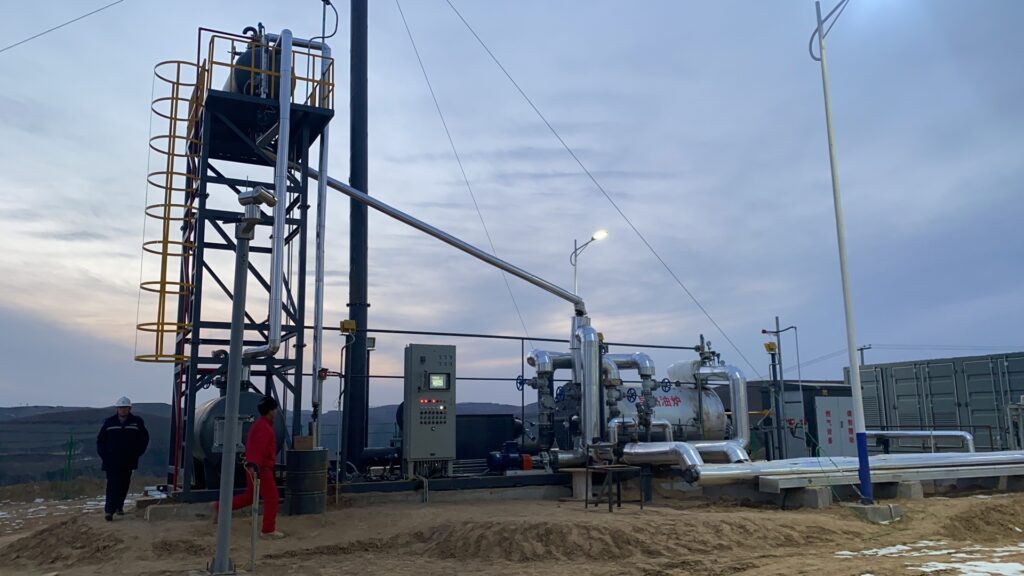
A skid-mounted thermal oil heater is a heat source device that highly integrates the thermal oil heater body, combustion system, circulation pump set, control system, and safety accessories onto a standardized steel skid. With core advantages such as modular design, factory pre-integration, rapid deployment, and global compliance adaptation, it has become a preferred stable heat source solution in the chemical industry—especially for overseas projects, EPC (Engineering, Procurement, and Construction) projects, and space-constrained scenarios. Its application deeply aligns with the chemical industry’s demand for “medium-to-high temperature precise temperature control, continuous and stable operation, and low implementation risk.” The following elaborates from three aspects: core application scenarios, unique value, and typical cases.
I. Core Application Scenarios: A “Mobile Heat Station” Covering the Entire Chemical Process Chain
The modular and pre-integrated features of skid-mounted thermal oil heaters enable flexible adaptation to heat source needs across multiple stages of chemical production, from raw material pretreatment to finished product processing. They are particularly advantageous in scenarios requiring transport convenience, installation timeliness, and complex working conditions.
1. Polymerization Reactions and High-Polymer Material Synthesis: Ensuring High-Temperature Control and Process Stability
Chemical Demand: Polymerization reactions (e.g., polyester, nylon, PVC) require a constant heat source at 300–400°C, with strict sensitivity to temperature fluctuations (±1–2°C). Traditional skid-mounted boilers have long on-site installation cycles (30–45 days), often delaying startup.
Skid-Mounted Application:
-
Integrate the thermal oil heater, reactor jacket circulation system, and temperature control unit onto a skid. Pre-testing in the factory verifies temperature control accuracy (e.g., simulating heat removal logic during exothermic polymerization stages), ensuring direct connection to the reactor upon arrival. The installation cycle is shortened to 7–10 days.
-
Case: In a Middle Eastern polyethylene project, a skid-mounted thermal oil heater provided 350°C heat for 3×300m³ polymerization reactors. Modular transport bypassed desert port lifting restrictions, and pre-testing ensured successful first-time startup, saving 25 days compared to a skid-mounted boiler.
2. Distillation and Rectification Processes: Replacing Steam Heat Sources for High-Boiling-Point Material Separation
Chemical Demand: Distillation of high-boiling-point organics like phthalic anhydride and maleic anhydride (bottom tower temperature: 200–280°C) requires a stable heat source. Steam boilers risk “local overheating leading to material decomposition,” and steam pipeline construction is costly.
Skid-Mounted Application:
-
The skid integrates the thermal oil heater and reboiler circulation pump set, directly heating the reboiler via thermal oil. With a temperature control accuracy of ±1°C, it avoids material thermal decomposition. The modular design eliminates the need for on-site steam pipelines, making it ideal for overseas new factories (e.g., Southeast Asian palm oil refineries).
-
Advantage: Compared to steam boilers, skid-mounted thermal oil heaters improve thermal efficiency by 15% (no condensation loss) and eliminate the need for water treatment systems, reducing maintenance costs.
3. Drying and Dehydration Processes: Stable Heat Source for Low-to-Medium-High Temperature Drying
Chemical Demand: Drying of dyes, pesticide technical materials, and inorganic salts (e.g., titanium dioxide) requires hot air at 100–200°C. Traditional electric heating is costly, and coal-fired boilers fail to meet environmental standards (especially in overseas projects).
Skid-Mounted Application:
-
The skid-mounted thermal oil heater heats air (via finned heat exchangers) to provide stable hot air for spray dryers and fluidized bed dryers, with a temperature control accuracy of ±2°C, suitable for thermosensitive materials. Factory-pre-integrated low-nitrogen burners (NOₓ < 30mg/m³) meet EU CE and U.S. EPA environmental standards.
-
Case: In a European pesticide intermediate project, a skid-mounted thermal oil heater replaced electric heating, reducing annual energy costs by 40% and passing TÜV environmental certification.
4. Evaporation, Concentration, and Waste Liquid Recovery: Flexible Heat Source for Complex Working Conditions
Chemical Demand: Evaporation of caustic soda solutions (120–150°C) and concentration of heavy metals in electroplating waste liquids (180–220°C) require continuous heat sources. On-site debugging of traditional boilers is easily affected by water quality and voltage fluctuations.
Skid-Mounted Application:
-
The skid is equipped with a backup circulation pump + dual-solenoid-valve burner, maintaining 70% load even if a single component fails, ensuring continuous production. Pre-testing simulates working conditions like “voltage fluctuations of ±10%” and “changes in water hardness” to ensure stable operation under extreme conditions.
-
Applicable Scenario: “Distributed heat sources” in chemical parks—multiple small skid-mounted thermal oil heaters are deployed分散, avoiding heat loss from long-distance centralized heating pipeline transmission.
5. Equipment Tracing Heating and Medium Insulation: Solving Transportation Challenges for Easy-Solidifying Materials
Chemical Demand: Asphalt, paraffin, and resins (melting point: 80–150°C) easily solidify in storage tanks/pipelines and require tracing heating to maintain fluidity. Traditional steam tracing carries risks of “leaks and drips.”
Skid-Mounted Application:
-
The skid-mounted thermal oil heater serves as the heat source for the tracing system, heating media via jacketed pipes or tracing coils, with a temperature control accuracy of ±3°C to avoid local overheating and medium aging. The modular design allows simultaneous transport and installation with storage tanks/pipelines, making it ideal for overseas remote area projects (e.g., asphalt transportation pipelines in African oilfields).
6. Fine Chemicals and Pharmaceutical Intermediate Synthesis: Meeting Explosion-Proof and Cleanliness Requirements
Chemical Demand: Nitration of sulfonamide drug intermediates (150–180°C) and sulfonation of surfactants (120–160°C) require precise temperature control in explosive environments. Retrofitting traditional boilers for explosion proofing is costly.
Skid-Mounted Application:
-
The entire skid is designed to the Ex d IIB T4 explosion-proof standard (explosion-proof housing, instruments, and cables), integrating a combustible gas leak alarm and emergency shutdown system. Factory pre-testing verifies explosion-proof interlock logic (e.g., 0.1-second shutdown upon gas leakage), meeting GMP cleanroom requirements for pharmaceutical chemicals.
II. Unique Value of Skid-Mounted Thermal Oil Heaters in Chemical Applications
Compared to traditional skid-mounted thermal oil heaters, skid-mounted models solve three core pain points in chemical projects:
1. Breaking the “Transportation and Installation Bottlenecks” to Shorten Project Cycles
-
Modular Transport: The overall dimensions comply with international standard container specifications (20/40-foot containers), eliminating the need to disassemble large components (e.g., heater body, chimney). Direct sea/land transport to overseas sites avoids delays due to insufficient port lifting capacity (e.g., a Middle Eastern project where a skid-mounted boiler was stranded at the port for 15 days due to size limits, while the skid-mounted model cleared customs directly).
-
Rapid Deployment: On-site work only involves connecting fuel (natural gas/fuel oil), thermal oil inlet/outlet, and electrical interfaces. The installation cycle is shortened by over 50% compared to skid-mounted boilers (7–15 days for standard projects vs. 30–45 days for skid-mounted), especially meeting the “fast-track” needs of EPC projects.
2. Factory Pre-Testing Reduces “On-Site Uncertainty” to Ensure Successful First-Time Startup
-
Full-Process Pre-Verification: Before leaving the factory, complete burner ignition tests, thermal oil circulation pressure tests (1.5×design pressure), control system logic verification (e.g., over-temperature shutdown, overpressure relief), and emission index testing (NOₓ/SO₂). Simulate typical chemical working conditions (variable load, high-temperature control) to verify performance, ensuring “ready-to-use upon arrival.”
-
Data Traceability: Pre-test reports include key data such as thermal efficiency (≥90%), temperature control accuracy (±1–2°C), and safety interlock response time (<0.5 seconds), meeting overseas owners’ rigid performance requirements (e.g., Saudi Aramco and BASF project acceptance standards).
3. Global Compliance Adaptation to Reduce “Regulatory and Certification Costs”
-
Multi-Regional Certification Coverage: Provide certifications like ASME (U.S.), PED (EU), GOST (Russia), and JIS (Japan) per project location requirements. Core components (burners from Germany’s Weishaupt, pumps from Denmark’s Grundfos) are international brands, ensuring compliance with local safety and environmental regulations.
-
Localized Service Support: Establish regional service centers in key chemical markets (Middle East, Southeast Asia, South America) to assist clients with project filing and acceptance (e.g., Brazil’s ANP petroleum project, Indonesia’s K3 safety production certification), reducing clients’ “compliance exploration” costs.